---
title: "Events: change, input, cut, copy, paste"
url: https://khanwaseem.com/blog/course/events-change-input-cut-copy-paste
author: "khan Waseem"
published: 2023-10-07
updated: 2023-10-07
topics: ["course", "Javascript Tutorial"]
description: "Discover how JavaScript events like change, input, cut, copy, and paste can enhance user interactions and functionality in web applications."
---
# Events: change, input, cut, copy, paste
JavaScript is a versatile scripting language that plays a crucial role in making web applications interactive and user-friendly. One of the ways it achieves this is through handling various events, including those related to user input. In this blog post, we’ll explore some essential events: `change`, `input`, `cut`, `copy`, and `paste`. We’ll learn how they can be used to enhance user experiences and add functionality to web forms and content editing.
Table of Contents
[Toggle](#)
- [The Change Event](#the-change-event)[Example:](#example)
- [The Input Event](#the-input-event)[Example:](#example-2)
- [The Cut, Copy, and Paste Events](#the-cut-copy-and-paste-events)[Example:](#example-3)
- [Enhancing User Experiences with Events](#enhancing-user-experiences-with-events)
## The Change Event
The `change` event is triggered when the value of an input element, such as a text input or a select dropdown, is changed by the user. This event is commonly used in forms to detect when users have made a selection or modified an input field.
### Example:
```xml
Code language: HTML, XML (xml)
```
**Output : **
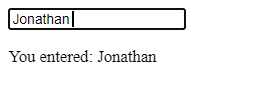
In this example, when the user enters their name and then clicks outside the input field, the `change` event is triggered, and the entered name is displayed in a paragraph below the input field.
## The Input Event
The **`input` **event, on the other hand, is fired every time the value of an input element changes, even if it’s a single character addition or deletion. It provides real-time feedback as the user interacts with the input field.
### Example:
```javascript
Code language: JavaScript (javascript)
```
**Ouput : **

In this example, as the user types into the search input field, the `input` event continuously updates the search results paragraph to display the search query in real-time.
## The Cut, Copy, and Paste Events
The `cut`, `copy`, and `paste` events are triggered when a user performs these clipboard operations in an input field or a content-editable area. These events allow developers to control and modify the clipboard data before or after these actions occur.
### Example:
```xml
Code language: HTML, XML (xml)
```
**Output : **
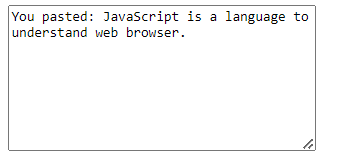
In this example, you can experiment with cutting, copying, and pasting text within the textarea. The corresponding events handle these actions and modify the clipboard data or prevent default behavior (in the case of paste) to customize the user experience.
## Enhancing User Experiences with Events
Understanding and utilizing events like `change`, `input`, `cut`, `copy`, and `paste` can greatly enhance the user experience of your web applications. These events provide real-time feedback, improve data handling, and enable you to add custom functionality to user interactions.
Whether you’re building forms that need dynamic validation, creating content-editable areas for rich text manipulation, or simply looking to make your web app more responsive, these JavaScript events are powerful tools in your development arsenal. They empower you to create engaging and user-friendly web experiences.
In conclusion, JavaScript events are a fundamental aspect of web development, enabling developers to respond to user actions and create interactive web applications. The `change`, `input`, `cut`, `copy`, and `paste` events, as demonstrated in this blog post, are just a few examples of how JavaScript can be used to enhance user experiences and add functionality to your web projects.
### Related posts:
[JavaScript – Events](https://blog.khanwaseem.com/javascript-events/)
[JavaScript-Form properties and methods](https://blog.khanwaseem.com/javascript-form-properties-and-methods/)
[HTML – Forms](https://blog.khanwaseem.com/html-forms/)
[HTML – Attributes](https://blog.khanwaseem.com/html-attributes/)
Powered by [YARPP](https://yarpp.com).